
2026 AMTE Dissertation Award
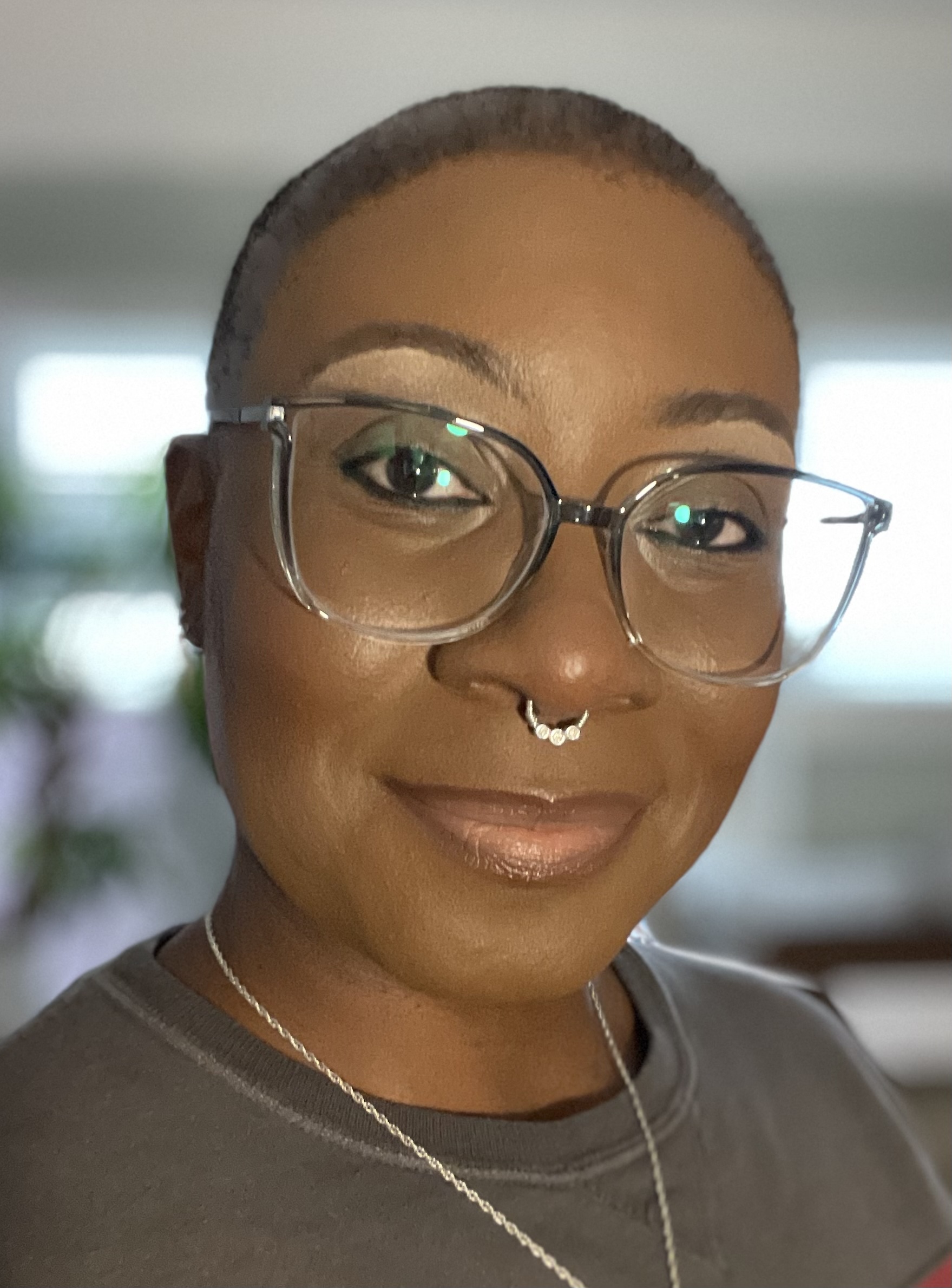
Ọlánrewájú T. Oríowó
Rowan Cabarrus Community College
THE BLACK WOMAN’S TOOLKIT: STORIES OF PERSISTENCE IN UNDERGRADUATE MATHEMATICS COURSES.
Biography
Born in Nigeria and raised in the Yorùbá culture of storytelling, it was perhaps natural that Ọlánrewájú, known to friends and colleagues as Lanre, was drawn to the stories of Black women as they experienced mathematics. Lanre left her country of birth and moved to countries where she would constantly need to prove her academic ability, especially in STEM learning spaces. Indeed Lanre received subtle and overt messages that she did not belong from classmates and from some instructors. Years later, it was in sharing her experiences (her stories) with her older sister and, later, with other Black women in STEM, that Lanre began to wonder about the various reasons they did not just quit. Why had they kept going? How had they kept going? Once Lanre began her doctoral program at UNC-Charlotte, she took every opportunity to refine this question until she focused on one niche group that does not get much attention yet is poised for tremendous impact - Black women who are preservice secondary mathematics teachers. These women will help sustain the low but steady number of Black women in secondary mathematics education in this country. Research acknowledges the struggles to retain and recruit Black women in mathematics and STEM, but clearly enough continue to fill the ranks. What kept them going? How had they kept going? Lanre was in the middle of a story that became her dissertation.
Lanre is a full-time mathematics faculty member at Rowan Cabarrus Community College, where she also serves as the team lead for the Quantitative Literacy mathematics course. In her role as instructor, Lanre replays the hours of conversations she had with her participants as she plans and facilitates mathematics instruction to restore fractured math relationships, and to create a learning space where learners can let down their guard and immerse themselves in mathematics and the occasional hilarious story from their instructor.
Lanre’s work is forever changed because of the time spent in narrative communion with her participants and she hopes they also found their time together to be spiritually enriching. She sends out her gratitude and hopes that it finds them in the classrooms they knew they would occupy one day. Lanre would also like to express sincere appreciation to her chair, Dr. Allison McCulloch, her committee, Dr. Brittany Anderson, Dr. Anthony Fernandes, and Dr. Michelle Stephan, NC2ML, her academic Ẹ̀gbọ́n, Dr. Olufunke Adefope, and her “big brother”, Mr. Mortenous Johnson. Their continued support and encouragement nurture her development as a researcher.